
-

Try advanced features for free
Get Smarter responses, upload files, create images, and more by logging in.
Log In Sign up & Earn $5

AI in the Classroom Shaping the Future of School Education
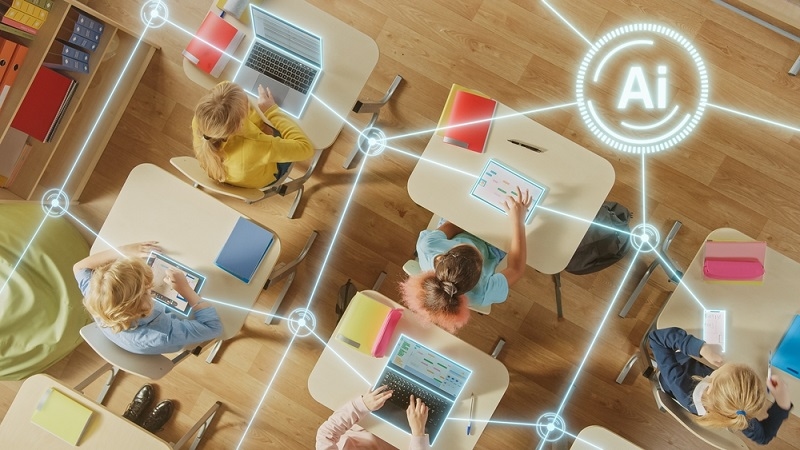
Child learning is evolving more rapidly than ever, and the emergence of artificial intelligence is one of the largest contributors to it. AI is providing new opportunities to students and teachers, whether it is in the form of personalized lessons or an emotional support system. This blog examines how AI in the Classroom is changing school education in the U.S., why this is significant, and how it can change the learning experience in the decades to come. You will also get to know about the AI in education, artificial intelligence in schools, the advantages of artificial intelligence in education, and the way artificial intelligence aids struggling students. This rapid change is something to discover.
Understanding AI In The Classroom
AI in the Classroom is not a visionary concept. Harmless digital tools are today getting accepted by schools in the U.S. to think, analyze, and assist teachers in things that were not possible previously. This chapter presents the functioning of these tools and the reason why students are more supported and understood.
How AI Fits Into Daily School Life
The use of AI tools is gradually becoming a daily classroom practice. Applications assist students to read more effectively, math software regulates the level of difficulty, and writing assistants provide feedback in real time. Educators do not need to spend hours of their time correcting simple mistakes since AI does the little things, and teachers can be creative and connected.
Why Students Enjoy AI-Driven Learning
Children adore instant responses, motivation, and active experiences. AI is capable of providing rapid feedback, games, and personalized learning at its own speed. Students who were previously too embarrassed to ask questions are now able to learn at their own pace.
The Role Of Teachers Remains Strong
Despite AI in the equation, there are still teachers who guide, mentor, and inspire. AI is not able to substitute teachers; it aids them. It manages to free up time to allow the teachers to concentrate on emotional development, personal dialogues, and the provision of a warm learning space.
Benefits Of AI For School Education
School is much better and more enjoyable with the various benefits that AI can offer. This part underlines the benefits of these tools to teachers, students, and even parents.
Personalized Learning At Every Step
Personalization is one of the largest advantages of AI in the educational field. All children learn in different ways. AI examines patterns, strengths, and difficulties of students and modifies lessons to suit individual students. A poor reader receives simpler words and more practice, whereas a quick learner receives more difficult material to keep herself going. There is no left behind or bored student.
More Time For Creative Work
Teachers often spend hours grading worksheets or preparing lesson plans. With AI taking care of administrative tasks, educators get their time back. This allows them to design creative projects, hold group discussions, and build hands-on learning activities.
Instant Feedback For Better Improvement
AI tools give quick and detailed feedback. A student writing an essay might see suggestions for grammar, structure, and clarity within seconds. Immediate corrections help students improve on the spot instead of waiting days for grading.
Boost In Student Confidence
Children have an interest in knowing that they are doing the right things. Students feel more comfortable when AI solutions give subtle directions. They are able to keep motivated, even when they commit mistakes, the software will tell them what did not work out, rather than judging them.
How AI Helps Struggling Students
The poor students may feel low, or they may not be noticed in the traditional learning environments. The support that AI gives is very gentle and meaningful in a manner that comforts and instills confidence in these learners.
Breaking Down Difficult Concepts
The presentation of lessons in AI platforms is presented in simple terms, pictures, and examples based on the learning style of a student. A complicated math problem would be made easier as the software offers other explanations until the child learns.
Supporting Students With Learning Differences
With ADHD, dyslexia, and other learning issues, the AI of Education provides tools that can be adapted to the student's requirements. Text-to-speech, speech-to-text, reading, and sensory-friendly interfaces are used to make the process of learning less stressful and smoother.
Encouragement That Feels Personal
The artificial intelligence in schools is constructed with motivational messages. In the scenario where a child answers a difficult question, AI can respond with an answer of, I am doing well, you are doing better! Such messages are highly emotional, especially to those students who are in need of an extra push.
Reducing Classroom Anxiety
Some of these students are either shy or afraid to seek help. Through AI, they can have a space to repeat the lessons, ask questions, and train without judgment. This gets rid of the anxiety and creates a better learning process.
Examples Of AI Tools In Classrooms
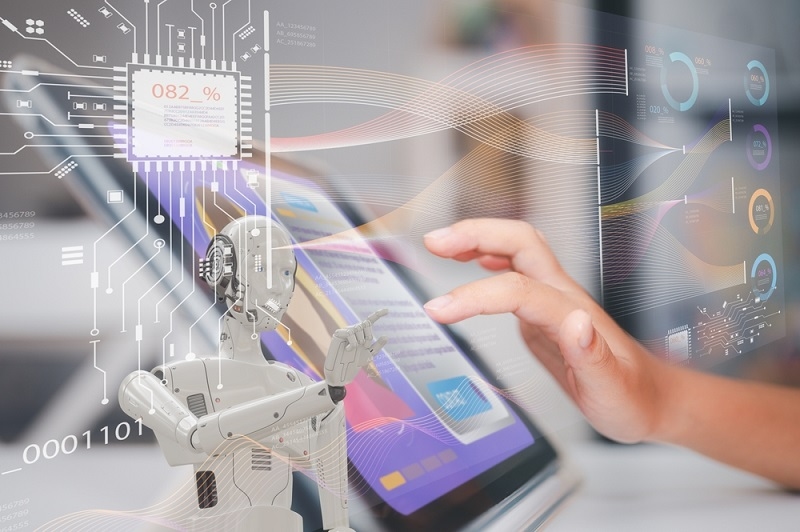
AI in the Classroom is presented in various ways nowadays. The majority of the tools are user-friendly, easy, and intuitive.
Smart Learning Apps Kids Love
Such applications as reading aids, math, or science simulators provide a practical interactive lesson. The apps make students remain active since they resemble games.
AI Writing Support For Stronger Communication
Writing tools help students brainstorm ideas, fix grammar, and structure essays better. These tools don't just correct errors-they explain how to improve, strengthening overall writing confidence.
Classroom Management Tools For Teachers
Through the AI systems, teachers are able to track attendance, analyze the performance of students, and comprehend their emotional well-being.
The Human Side Of AI And Why It Matters
It becomes even more important with all this technology, the emotional human experience. AI has the potential to bring students closer to their ambitions, yet the way they develop their relationship with the educator and other peers will determine the kind of people they become.
Building Confidence And Reducing Stress
AI makes students feel more comprehended. Individual teaching minimizes frustration, and instant feedback is a relief. When children surmount the challenges, they may feel proud, particularly when in those difficulties they have been struggling.
Emotional Support Through Predictive Tools
Certain AI space identifies symptoms of stress or lack of attention. When a student appears angry or distracted, the system notifies the teacher, thus assisting them in providing emotional support at the appropriate moment. This gives modern education a warm touch.
Conclusion
AI in the Classroom is bringing a new horizon to the student and teacher. It is also personalizing, supportive, and engaging learning like never before. The children who once seemed to be adequately left behind are now finally getting their due attention, and teachers are having more freedom to go on with creativity, connection, and emotional development. Along the way of making AI a regular aspect of school life in the U.S, its influence will only expand further to carve out the future where learning will become easier, gentler, and meaningful.
And with families, educators, and learners seeking smarter means of acquiring firm concepts, programs such as TalkGPT.com simplify the process of dissecting, posing questions, and actually learning concepts, not merely acquiring retorts. It is another step toward the realization of the future when learning will empower people.
Recommended Articles
How to Use AI for Small Busine...
Small businesses are expected to move fast now. Customers want quick repl...
Read More
What is AI Code Debug & How Do...
Learning how to build websites is very important today. The tech...
Read More
What can I help you with?
Unlock more with TalkGPTPlus
TalkGPTPlus gives you higher limits, smarter models, and more.