
-

Try advanced features for free
Get Smarter responses, upload files, create images, and more by logging in.
Log In Sign up & Earn $5

What Is AI Email Management and How It Improves Focus
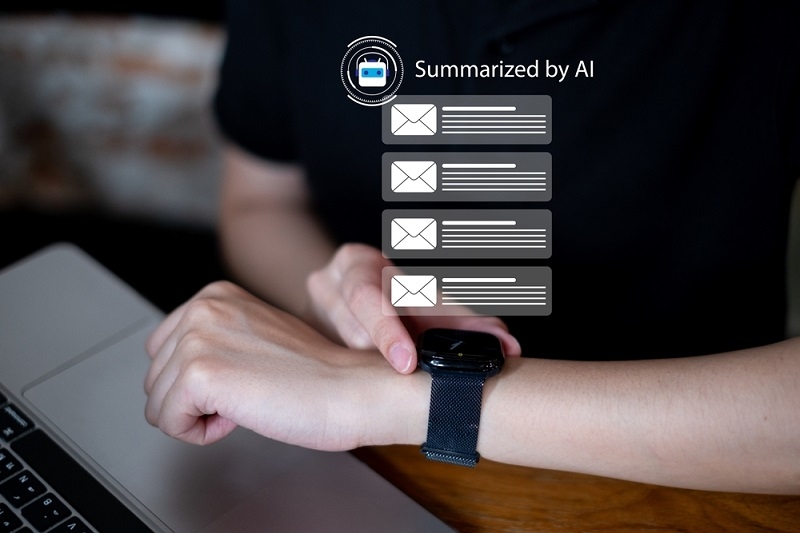
Email is still the backbone of professional communication. It is also one of the biggest sources of daily friction. People spend hours opening, sorting, replying, and searching through messages, often without realizing how much time is lost in the process. This is where AI email management becomes relevant.
To understand the value clearly, it helps to step back and look at what is actually happening inside a modern inbox and how artificial intelligence changes that experience.
What Is AI Email Management
What is AI email management in simple terms? It is the use of artificial intelligence to help people handle email more efficiently. Instead of manually deciding what to read first, what needs a reply, or what can wait, AI systems assist by organizing messages, highlighting priorities, and supporting responses.
AI email management is not just about filtering spam or moving newsletters into folders. It focuses on understanding email content, intent, and urgency. The system looks at patterns in your inbox and how you interact with messages, then uses that information to reduce unnecessary work.
At its core, AI email management is about decision support. It helps you make faster and better choices inside your inbox.
Why Traditional Email Tools Fall Short
Most email platforms rely on static rules. You create folders, filters, and labels based on senders or keywords. While this helps at a basic level, it breaks down quickly as email volume grows.
Rules do not understand context. A message from the same sender can be urgent one day and informational the next. Manual systems cannot adjust on their own. They also require ongoing maintenance, which most users stop doing after a while.
This limitation is the reason AI for email management exists. Instead of fixed logic, AI systems learn from behavior and adapt as priorities change.
How AI Email Manager Works in Practice
The AI email manager's working mechanism is questioned by a lot of people who do not believe its marketing promises. However, if we simplify the process, it is indeed very simple to understand.
Initially, the system applies language analysis for reading emails that come in. It marks topics, requests, questions, and signals of urgency. This allows the tool to differentiate between a meeting request and a general update.
Subsequently, the AI adopts and applies the learned behavior. It closely monitors which emails are opened first by you, which ones get a quick reply and, eventually, messages that are archived or ignored. It takes time but eventually, a personal priority model is created for you.
Next, the system's actions support. Actions can be prioritizing important emails, summarizing lengthy discussions, and suggesting responses based on similar past replies, among others.
And lastly, feedback is a critical factor to improve the accuracy. If you change a suggested reply or move an email from one priority category to the other, the system will make the necessary adjustments. This feedback loop is what makes it difficult to tell the AI email manager apart from a personal assistant.
Key Capabilities of AI for Email Management
AI for email management usually includes several core capabilities that work together.
One capability is intelligent prioritization. Instead of showing emails in strict time order, the system ranks them by relevance. Important conversations stay visible while low value messages fade into the background.
Another capability is content understanding. AI can recognize common email types such as requests, confirmations, follow ups, or approvals. This allows the system to suggest appropriate next steps.
Draft assistance is also common. The AI proposes response text that reflects the context of the message. This is especially useful for routine replies where the intent is clear but typing still takes time.
Search support is another area where AI email management helps. Instead of remembering exact keywords, users can search by meaning, such as emails about an invoice from last month.
AI Email Management Benefits for Daily Work
The primary advantages of AI email management are easily observed in everyday practice.
The first to come are time savings. When smart AI deals with prioritization and drafting, users spend less time on scanning and typing. The time savings may be really small, but they will still add up in a matter of weeks.
Less attention gets paid to unimportant messages which means better focus. This also leads to less context switching and less mental fatigue.
Moreover, follow-up is done more consistently. Built-in reminders and nudges in the inbox mean fewer emails losing out without a response.
The main benefit in AI email management for teams is quicker turnaround and more reliable communication. Shared templates and suggested replies contribute to lowering the variations and mistakes.
Where AI Email Management Fits Best
AI email management is most effective in places with a large volume of messages or where communication follows repetitive patterns. Sales, customer support, recruiting, and executive roles are the areas where the benefits are immediately seen.
However, it does not mean that large companies are the only users. Freelancers and small businesses get the same advantage as they are often the ones who deal with all the emails.
What matters is not the size of the company but the complexity of the inbox.
Limitations to Keep in Mind
AI email management should not be considered as the only means of judging. Even though replies are suggested, they still have to be checked. Prioritization is sometimes not able to capture subtlety, particularly at the start.
Besides this, a learning period is also involved. The system gets better as it gets more examples of your behavior. Results are hardly ever perfect on the first day.
Another point to think about is privacy. Users should always be aware of how email data is going to be processed and stored before they turn on AI tools.
Why select GPTmail?
GPTMail prioritizes practical AI email control instead of too much automation. It assists users in arranging messages, composing concise replies, and keeping up with follow-ups without altering their existing email use. The time-saving aspect is significant while the user retains total control.
The Future of AI Email Management
AI email management will continue to improve as language models become better at understanding intent and tone. The goal is not to remove humans from communication, but to remove friction from routine tasks.
As inboxes grow more complex, AI for email management is becoming less of a convenience and more of a necessity.
FAQs
What is AI email management used for most often?
AI email management is commonly used for prioritizing important emails, drafting routine replies, and reminding users about unanswered messages. These are the areas where time savings are most noticeable.
How AI email manager works with changing priorities?
The system adapts by learning from user behavior. When priorities shift, changes in response patterns guide the model so future sorting reflects new preferences.
What are the main AI email management benefits for professionals?
The main benefits include reduced time spent in the inbox, fewer missed responses, and improved focus on high value communication.
Recommended Articles
What is AI Stock Trading & How...
Learning how to make money in the digital financial markets is essential beca...
Read More
Learn How to Build Your Own We...
Building a website used to feel like some mysterious project you...
Read More
What can I help you with?
Unlock more with TalkGPTPlus
TalkGPTPlus gives you higher limits, smarter models, and more.